
Getting a diagnostic or imaging test? Here’s what to expect
This simple guide walks you through how to prepare, what to expect during the test, and how to take care of yourself afterward.
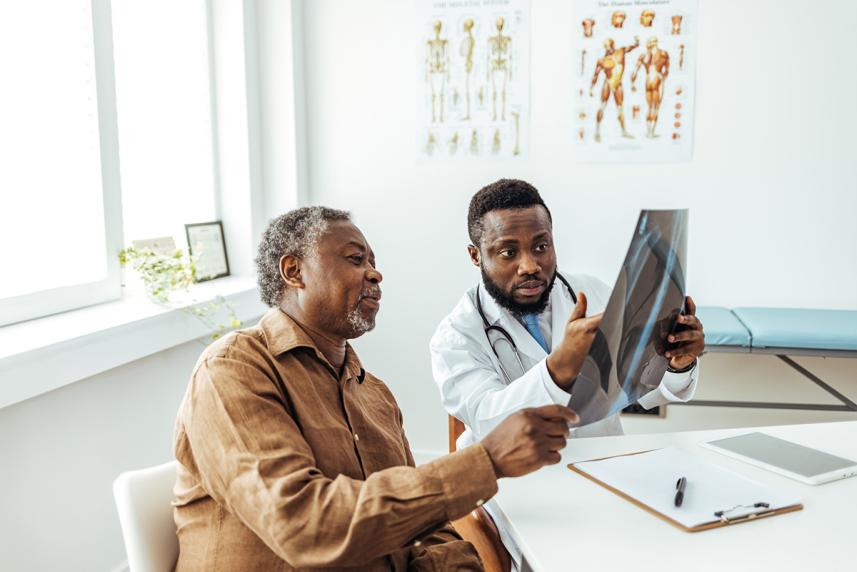
Doctors often order diagnostic tests — like MRIs, CT scans, or lab work — to learn more about what's going on inside your body.
These tests can help find the cause of symptoms, confirm a diagnosis, or catch health problems early, before they become serious.
If you've never had one before, the process may feel a little overwhelming. But knowing what to expect can help you feel more at ease and ready. Whether you're getting imaging or lab work, this guide explains how to prepare, what happens during the test, and how to take care of yourself afterward.
MRI (Magnetic Resonance Imaging)
An MRI gives doctors a picture of your organs and tissues — without radiation. Instead, magnets and radio waves create detailed images that can help doctors spot a tumor, look for the cause of frequent headaches, or monitor an ongoing issue, such as inflammatory bowel disease or multiple sclerosis.
When it's ordered: Doctors may order an MRI when they need detailed images of soft tissues, such as the brain, spinal cord, joints, or internal organs. For example, if you've had a sports injury to your knee, persistent back pain, or recurring migraines, an MRI may help reveal the cause. An MRI is also preferred in situations where doctors want to limit radiation exposure — for instance, if repeated scans are expected (like monitoring a chronic condition), or when imaging the brain, spine, or pelvis, where minimizing radiation is especially important.
What to expect: You'll lie still in a narrow tube. It can be loud, but you'll have earplugs or headphones that play music. The scan usually takes 30 to 60 minutes. In some cases, if you need to stay completely still for a long time or if the test is especially complex, your doctor may recommend light sedation.
How to prepare: Wear comfortable clothes that are easy to take off — you'll likely need to change into a medical gown before your MRI. The day before, read the instructions your provider has shared. You may be asked to fast for a few hours. Let your doctor and lab technicians know if you're claustrophobic so they can take steps to make the experience as comfortable as possible. Some facilities have accommodations such as a wide-bore MRI (which has a larger opening) or an open MRI (which has openings on multiple sides).
After: You can go about your day as usual, unless you were sedated. Your doctor will typically review the images and share results within a few days to a week, depending on urgency.
Who it may not be right for: People with certain metal implants (like pacemakers, cochlear implants, or metal clips in blood vessels) usually can't get an MRI because the magnet can interfere with the device or move the metal. Always tell your doctor about any implants before the test.
X-ray
Anyone who fell off a swing as a kid or rounded the bases a little too fast has probably had an X-ray to check for broken bones. But these images, which use a small amount of radiation to take pictures inside your body, can also pick up problems in your lungs and chest.
When it's ordered: X-rays are often ordered for suspected broken bones, joint injuries, or chest issues such as pneumonia. They may also be used to check for dental problems or arthritis.
What to expect: You'll be positioned in front of a machine while images are taken. The whole process usually takes just a few minutes.
How to prepare: Be sure to wear loose, comfortable clothing free from any metals. You'll also need to remove any metal jewelry or accessories before the scan.
After: There is no recovery time needed from the test itself. Depending on your results, your doctor may recommend a cast, physical therapy, or further testing if something unexpected shows up.
Who it may not be right for: In general, almost anyone can get an X-ray. But if you're pregnant, your doctor may recommend a different test to limit radiation exposure to the baby.
CT (Computed Tomography) Scan
A CT scan uses X-rays to create cross-sectional images of your body, offering more detail than a standard X-ray. Doctors often turn to CT scans when they need a clearer view of your organs, blood vessels, or bones, or when they need results quickly.
When it's ordered: A CT scan may be ordered to evaluate injuries after a car accident, check for internal bleeding, detect tumors, or guide treatment for conditions like kidney stones or appendicitis. It's sometimes chosen instead of an MRI if you have certain implanted devices (like a pacemaker), if you can't tolerate lying still in a narrow tube, or if your doctor needs results quickly — since CT scans are usually faster and more widely available.
What it is: A CT scan uses X-rays to create cross-sectional images of your body, offering more detail than a standard X-ray.
What to expect: The machine is open and shaped like a doughnut. You'll lie still while it rotates around you. Most scans take less than 30 minutes.
How to prepare: You may need to avoid eating or drinking for a few hours. Some scans involve a contrast dye, which highlights certain areas — such as blood vessels, the digestive tract, or organs — to give doctors clearer images. The dye may be swallowed, injected, or given through an IV. Tell your doctor about any allergies you may have, especially to contrast materials or iodine.
After: If your scan required contrast dye, be sure to drink plenty of water to help flush it out of your system. Your doctor will usually review and share results within a few days.
Who it may not be right for: Like X-rays, CT scans use radiation, so they're not the first choice during pregnancy unless absolutely necessary. They may also not be right for people with a severe allergy to contrast dye (if the scan requires it).
Biopsy
A biopsy is the best way for a doctor to find out if an area of the body has cancer or pre-cancer cells.
When it's ordered: A doctor may order a biopsy if a test or exam shows something that looks unusual — like a lump, growth, or area that doesn't look normal.
What it is: During a biopsy, a doctor takes a small sample of tissue, fluid, or cells from the area that needs to be checked. The sample is sent to a lab, where a specialist looks at it under a microscope to see if there are any signs of cancer or other problems.
What to expect: Many people feel nervous about having a biopsy, but it's usually quick and simple. You may feel a pinch or some pressure, but the area is often numbed first so it doesn't hurt.
How to prepare: Tell your doctor about all medicines and supplements you take. You may be asked to stop certain medicines, like blood thinners, before the test. If you'll be getting medicine to help you relax (sedation), plan for someone to drive you home.
After: It's normal to have some mild pain, soreness, or light bleeding where the biopsy was done. This should go away in a few days.
Who it may not be right for: A biopsy might be delayed or not recommended if there's an infection in the area, a bleeding problem, or another health issue that makes the procedure unsafe.
Four tips to help your test day go smoothly
No matter which diagnostic test you have coming up, here are a few last reminders to help your test go smoothly.
- Bring a list of your medications. This helps the care team know what you're taking in case they need to avoid interactions or adjust instructions.
- Bring your personal and health plan ID cards. Some labs, hospitals, or imaging centers require these at check-in, even for routine tests.
- Arrive early. There may be forms to fill out or a short wait before your appointment. Giving yourself extra time helps reduce stress.
- Ask questions. If you're not sure why the test was ordered or what it's meant to check, your doctor is there to explain. Don't hesitate to speak up.
Remember: It's okay to have questions. If you have questions about your diagnosis, what the test is looking for, or what your results might mean for your health, talk to your doctor or care team. You deserve to feel informed and supported every step of the way.